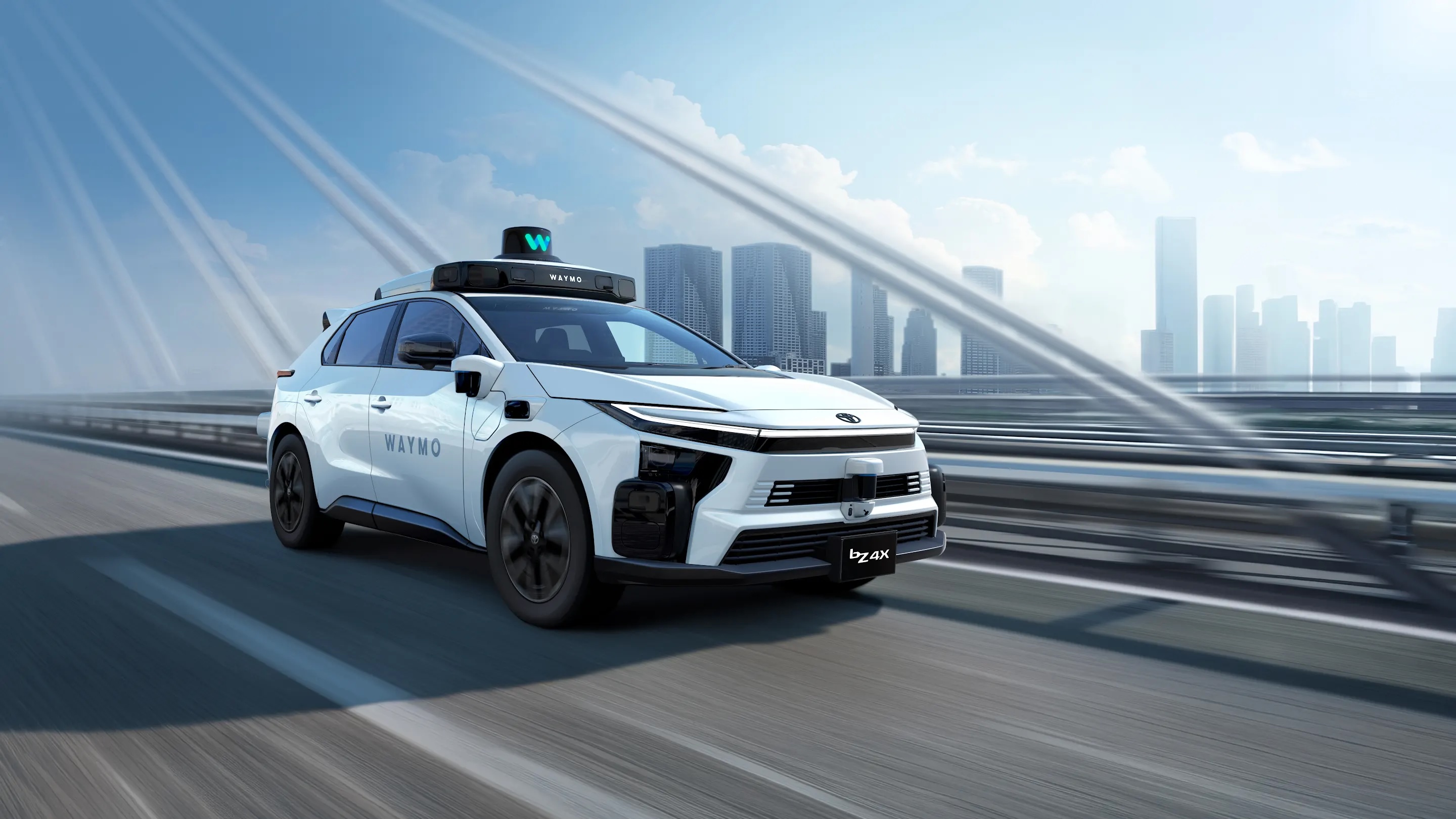
Toyota will build Waymo robotaxis for Japan and the U.K.
Toyota will build Waymo's self-driving system into the bZ4X at the factory, giving Waymo a right-hand-drive robotaxi for Japan and London to add to its list of vehicle suppliers
Remember that Waymo / Toyota announcement 18 months ago, where the two companies said they would look into maybe working together? Well, today the two companies have announced the next step in that partnership: Toyota’s electric bz4x will be used by Waymo for their Generation 6 Robotaxis in right hand drive markets like Japan and the UK. The bz4x (horrible name, I know) will join the Zeekr RT, the Hyundai Ioniq 5, and the now out of production Jaguar I-Pace on Waymo’s list of vehicle suppliers. Toyota will build 2027 bZ4X electric SUVs with Waymo’s self-driving system installed at the factory, and Waymo plans to start testing them in Japan next year.
The deal
Waymo has agreements with several automakers to procure vehicles, and in that sense their deal with Toyota is no different. But most of Waymos’s vehicles today are manufactured on a main production line, then sent to a second facility where Waymo integrates the sensor suite, compute, and prepares the vehicle for service. With vehicles like the Zeekr RT, this strategy actually helps minimize import tariffs by putting more of the value add on U.S. soil.
What’s notable here is that Toyota will manufacture the bZ4X and integrate Waymo’s driving system at its Takaoka factory in Japan. That should greatly simplify production and allow Waymo to get vehicles on the road much more quickly as they scale around the world. With Toyota’s production expertise, I’m sure that line will be humming once it’s up and running.
The companies left the door open to more. They said they will keep looking at bringing Waymo’s technology to Toyotas that people buy and own, and at unspecified “initiatives” that would use what Waymo learns from its real-world operations to make roads safer. Toyota executive vice president and board member Hiroki Nakajima said Toyota will “continue to explore how integrating vehicles with traffic infrastructure can make those roads safer still.”
The idea of a personally owned Waymo is exciting, but feels far off. Today while there are millions of miles being traveled by autonomous cars every year, there are no autonomous cars a consumer can actually buy and own. That will change eventually, and one day every car will come with self-driving technology built in… but you get the sense from this press release that Waymo and Toyota are still trying to figure out exactly how that would work.
Partnering with local automakers
As Waymo enters Japan, partnering with the Japanese auto industry is sure to generate a lot of good will. Now Waymo isn’t some strange foreign company that’s a threat to local automakers and easy to point the finger at. No, when people look at that Waymo Robotaxi they’ll see a Toyota, pride of Japan, built in Japan. They will be proud to see it, and local media will cover it glowingly. I’m sure Toyota will be helpful in navigating the regulatory environment in Japan as well.
On the other hand, there is added complexity with each new vehicle type, especially when each vehicle is from a completely separate brand in a completely different country. When I take a ride in the new Waymo “Ojai” vehicles (the Zeekr RT), I can’t help but notice how much worse the quality of the self-driving is compared to the good old Jaguar I-Paces. I have no doubt that the new Generation 6 Waymos will exceed the driving performance of the older models, but it seems to be taking some time to fully adapt to the new sensor suite. I do wonder how Waymo will handle having several different vehicles from several different manufacturers in several different countries. So far they haven’t shown that they can deliver consistent ride quality across two vehicle models, let alone four.
Self-Driving is Going Global
Self-driving isn’t just for the United States and China anymore. I’m excited to see this technology expand, and for the production of self-driving cars to increase. When you look at the rate of crashes between these cars and their human driven counterparts, you realize these vehicles can’t be made fast enough.
Comments
No comments yet. Start the conversation.